If you want a recreational tract in Pickens County to feel useful from day one and hold its value over time, design matters more than most people think. Steep ground, mountain views, hunting access, camping plans, and future building ideas can all work together, but only if the layout fits the land and the county rules. This guide will help you think through access, use, improvements, and long-term value so your tract works better now and stays flexible later. Let’s dive in.
Why Pickens County design matters
Pickens County is not just any rural land market. It is shaped by mountain-and-lake recreation, with places like Lake Jocassee, Table Rock State Park, Caesars Head State Park, and the Jocassee Gorges helping define what buyers expect from land in this area.
That matters because a tract here often gets judged on how well it actually functions for outdoor use. A property that feels thoughtfully recreational tends to stand out more than one that is simply undeveloped acreage with no clear plan.
In unincorporated Pickens County, the Unified Development Standards Ordinance is intended in part to protect land values and preserve natural and scenic resources. For you, that means the best results usually come from planning roads, drainage, clearing, and use areas as one system instead of tackling them one piece at a time.
Start with access first
Entrance design sets the tone
A recreational tract is only as usable as its entrance. If your property connects to a county-maintained road, Pickens County says driveway tie-ins require an encroachment permit, and the driveway location must meet line-of-sight requirements.
The county also notes it will not supply a tie-in for commercial or vacant property such as hunting property. That makes it especially important to think through where the entrance goes, how durable it will be, and how easily trucks, trailers, or equipment can move in and out.
Internal roads shape the whole tract
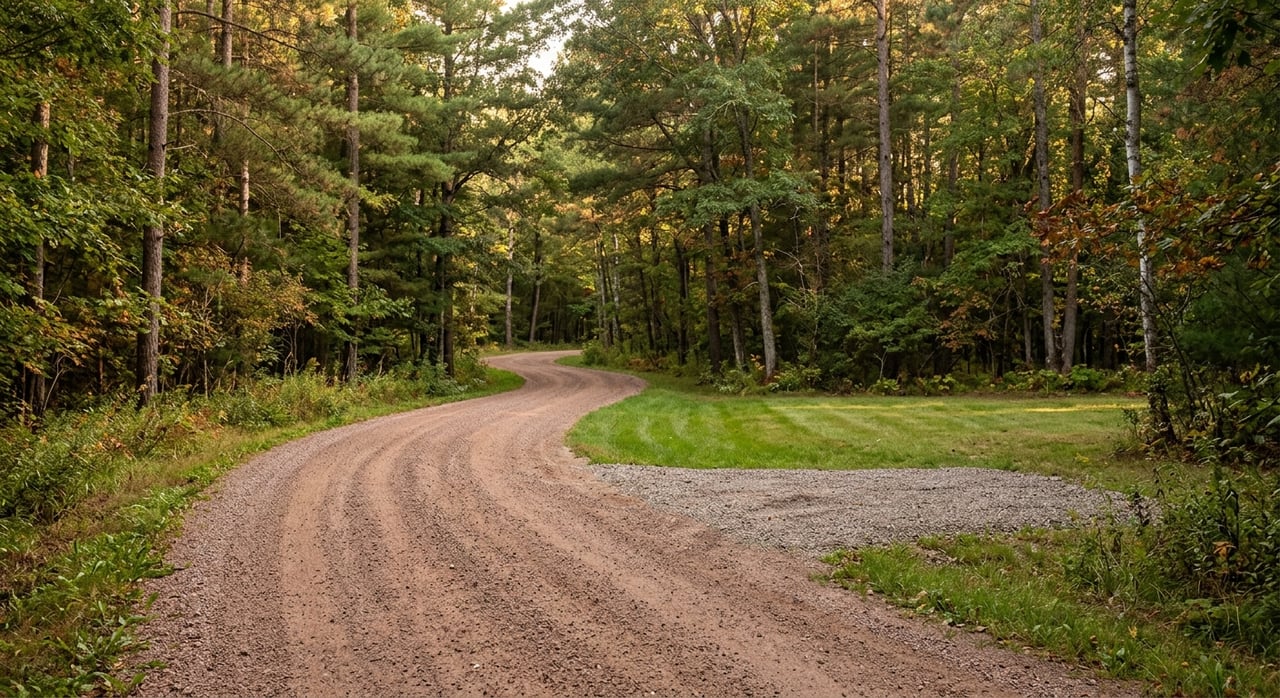
Once you have a workable entrance, internal circulation becomes one of the biggest design choices on the property. In most cases, a simple all-weather main road with a few smaller spurs or trails works better than overbuilding a large network of cleared paths.
That approach helps you keep heavier traffic away from sensitive areas while still reaching key parts of the tract. It also supports cleaner drainage and a more organized feel, which can help both day-to-day use and future resale.
Work with the slope, not against it
Keep disturbance compact
Pickens County stormwater thresholds are low enough that grading decisions matter early. The county says disturbing more than one-quarter acre may require a simplified grading permit, while disturbing one acre or more can require a land disturbance permit.
For that reason, it usually makes sense to keep road grading, clearing, and parking pads compact and intentional. On steeper Pickens County ground, a smaller footprint often protects both the land and your budget.
Put activity areas on stable ground
The highest-use parts of a recreational tract usually perform best when they are near the entrance or on naturally stable ground. That may include a gravel parking area, a small gathering space, a campsite, or a future cabin site.
Keeping these improvements in durable locations can reduce erosion concerns and make the tract easier to enjoy in all seasons. It also lets you preserve the quieter back acreage for hunting, habitat, timber, or low-impact trail use.
Plan early for a cabin or homesite
If part of your vision includes a cabin or homesite, sequence matters in Pickens County. County permitting materials say the typical order is septic approval first, then a 911 address, then the building permit.
That means a great-looking homesite is not enough by itself. You want to think early about soil suitability, access to the site, and whether your planned clearing or grading could trigger county permitting requirements.
If construction will connect to a county road, the county also says an encroachment permit is required. Planning that early can help you avoid redesigning the entrance or moving the build site later.
Understand camping and RV use
Casual use and formal use are different
Many buyers picture a tract where they can camp, bring a travel trailer, or create a weekend setup for family use. In Pickens County, that can be very different from a formal campground or RV park.
County materials show that formal campground or RV use is regulated, with standards related to access and site layout. Current county rules also show a more structured model for that kind of use, including direct frontage to a collector or arterial street, roads to each site, and limits on permanent residency.
Match the layout to the intended use
If your goal is simple private enjoyment, you may only need a durable entry, a compact pad, and a practical circulation plan. If your goal is to create something that functions like a campground or RV development, you need to evaluate that as a regulated land use, not assume it works like casual rural parking.
That distinction can save you time and money. It also helps you design a tract that fits your actual use instead of creating improvements that are hard to approve or awkward to use.
Design for hunting and family use
Private land offers flexibility
For hunters, private recreational land in South Carolina offers important flexibility. SCDNR notes that Sunday hunting is allowed on private land but not on Wildlife Management Areas, which makes private tracts useful for owners who want more freedom in how they plan outings.
That flexibility is one reason multi-use design matters. If you can separate travel routes, stand access, gathering space, and quieter habitat areas, the property tends to work better for both hunting and family recreation.
Stand access should be safe
SCDNR emphasizes that falls from tree stands cause serious injuries. That makes stand placement about more than just sight lines or game movement.
When you design a tract, think about safe, low-risk routes to stand locations and practical paths for loading, unloading, and game recovery. A smart layout can make the property easier and safer to use without changing its character.
Keep boundaries clear
Trespass control should be part of the original design, not an afterthought. SCDNR’s Property Watch Program is aimed at property protection and trespass prevention, which supports the value of gates, posted boundaries, and clearly defined access points.
For many tracts, a single controlled entrance and obvious boundary marking can improve both security and usability. It also gives the property a more finished, intentional feel.
Balance timber, habitat, and recreation
One of the biggest strengths of a Pickens County tract is its ability to do more than one job. The South Carolina Forest Stewardship Program is built around multiple-resource management, including timber, wildlife habitat, recreation, aesthetics, and soil and water conservation.
That framework fits this market well. A tract can be enjoyable today while still supporting long-term habitat and timber value if the layout respects how those uses interact.
Road layout affects timber value
Timber value depends on more than just acreage. The South Carolina Forestry Commission notes that species, size, quality, accessibility, and local supply and demand all matter.
That is why road placement deserves careful thought before trails and improvements are finalized. If harvest access is poor or internal movement is awkward, you can limit future options even if the timber itself is strong.
Stewardship can improve market appeal
The South Carolina Forestry Commission offers landowner services that can provide a written management plan addressing timber income, wildlife habitat, and recreation. For larger or more detailed tracts, the agency also points landowners toward consulting foresters when a more detailed plan or timber cruise is needed.
That kind of planning can make a tract easier to manage and easier to explain to a future buyer. In many cases, a clean, flexible tract with thoughtful stewardship feels more valuable than one that has been overcleared or improved without a clear system.
A simple layout that often works
While every property is different, many successful multi-use tracts in Pickens County follow a simple pattern:
- A stable, permitted entrance from the public road
- A main all-weather internal road
- A compact parking or gathering area near the front or on stable ground
- Smaller spur trails to hunting or recreation zones
- Preserved back acreage for habitat, timber, and quiet use
- Clear boundaries, gates, and defined access points
- Early planning for septic, building, and grading needs if a cabin site is part of the vision
This kind of layout keeps the tract practical without overbuilding it. It also respects the county’s broader goals of protecting land values and preserving natural and scenic resources.
Think about resale from the beginning
Even if you plan to keep the tract for years, resale value should still shape your design choices. Buyers in Pickens County often respond well to land that feels easy to understand, easy to use, and true to the region’s outdoor character.
That usually means avoiding random clearing, confusing road patterns, or improvements that create drainage and access issues. A tract that balances recreation, access, habitat, and flexibility is often more marketable than one built around just a single use.
If you are buying, selling, or trying to unlock the best use of a recreational tract in Pickens County, local land knowledge matters. For practical guidance on access, layout, timber considerations, and market positioning, connect with Joseph Cann.
FAQs
What makes a recreational tract in Pickens County feel more valuable?
- A tract usually feels more valuable when it has practical access, a clear internal layout, compact improvements, and a good balance of recreation, habitat, and long-term flexibility.
What permits may matter for land improvements in Pickens County?
- Depending on your plans, you may need septic approval, a 911 address, a building permit, an encroachment permit for county-road access, and possibly grading or land disturbance permits based on how much ground you disturb.
Can you park an RV anywhere on rural land in Pickens County?
- Private recreational use and formal campground or RV use are different, and formal RV or campground-style use is regulated by county standards for access and site layout.
Why is road planning important on a hunting tract in Pickens County?
- Road planning affects access, drainage, safety, habitat disturbance, future timber access, and how easy the tract is to use in different seasons.
How does timber planning help a multi-use tract in Pickens County?
- Timber planning can support recreation, habitat, water protection, and future value, especially when roads and use areas are laid out with long-term management in mind.
What should you consider before choosing a cabin site on Pickens County land?
- You should consider septic approval, access, slope, stability, grading impacts, and whether the site works with the county’s permit sequence and road requirements.