Thinking about building on acreage in Greenville County? A beautiful tract can look like the perfect homesite, but looks alone do not tell you whether you can legally build, where the house can go, or how much extra work the site may need. If you want to avoid surprises before you buy, it helps to understand the county and state reviews that shape what is actually possible. Let’s dive in.
Start with legal buildability
Before you think about house plans, focus on whether the parcel can support a home under current rules. In Greenville County, permit review looks at zoning, floodplain status, road frontage, setbacks, septic or sewer documentation, street address, and tax map ID before a building permit is issued.
That means a listing description is only a starting point. If you are serious about a property, check it against Greenville County GIS and confirm the zoning if anything seems unclear. A zoning verification request can help you confirm the district before you commit.
Zoning does not tell the whole story
If the property is zoned, allowed uses are controlled by the county use table. If it is unzoned, that does not mean there are no rules. County land development regulations can still apply.
You also need to account for deed restrictions, covenants, and subdivision rules. Those private restrictions remain your responsibility to investigate, even when a parcel appears buildable from a county standpoint.
Rezoning can affect your timeline
If your plans require rezoning, build extra time into your purchase and planning process. In Greenville County, a rezoning typically takes 3 to 4 months and involves public hearings and County Council action.
For buyers who want to move quickly, that timeline matters. It is much better to know early than to learn after closing that your intended use needs added approvals.
Confirm road access early
Access is one of the biggest issues with acreage. A parcel may have the right amount of land, but if driveway access is limited or complicated, your building plans can change fast.
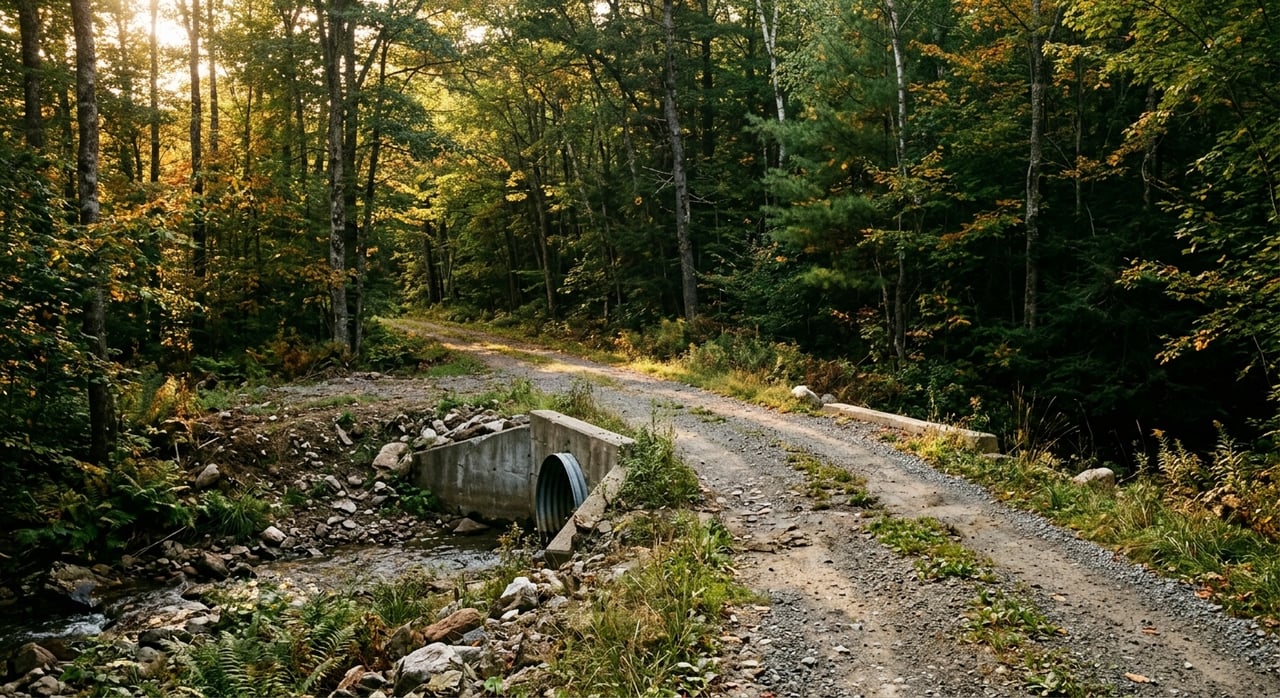
Greenville County requires a driveway approach permit. For a new residence, the county can issue a driveway culvert only when there is a building, mobile home, or septic permit. The county will not provide a driveway culvert to vacant land, though an encroachment permit may be available at the owner’s expense.
Driveway placement is more than convenience
Where the driveway meets the road matters for safety and design. County guidance highlights sight distance, drainage, and road geometry as key factors in driveway review.
On acreage, a long driveway can also influence where you place the house, shop, barn, or parking area. If the entry point is not ideal, the rest of the site plan may need to shift with it.
Check utilities before assuming the lot works
One of the most common acreage mistakes is assuming utilities will be simple. In Greenville County’s rural residential areas, public water and sewer are not always available.
That means your future homesite may depend on septic, a private well, or added off-site utility work. A tract can be attractive on paper and still require more planning and cost than you expected.
Rural acreage often needs private solutions
South Carolina Department of Environmental Services advises buyers to confirm water and sewer availability with local government before buying land. That is a smart step for any buyer looking at larger tracts or rural properties.
If public service is not available, you need to know whether the site can support the systems required for a home. This is especially important before finalizing house size, placement, and budget.
Treat septic as part of site design
On acreage, septic is not just a permit box to check. It is a major design issue that can determine where your home, driveway, and outbuildings can go.
SCDES requires site approvals and permits for all septic systems. During site inspections, the agency considers wells, property lines, surface waters, buildings, drainage ditches, the planned house footprint, driveway, and outbuildings.
Soil conditions can limit your plans
Soil conditions can decide whether a lot supports a conventional system. If it does not, the parcel may require other options, and that can affect cost, design, and layout.
In practical terms, septic suitability may control house placement and may even limit home size. That is why acreage buyers should not wait until final plans are drawn to start asking septic questions.
Keep your plat and dimensions handy
SCDES asks for official plats or deeds with property dimensions during the septic application process. Having those documents ready can help move the review forward.
Wet soils can also delay site visits or inspections. If your timeline matters, it helps to plan for weather and field conditions instead of assuming every step will move immediately.
Plan for a private well if needed
If the property is not served by public water, a private well may become part of your build plan. That should be addressed early, not after you have settled on a final home design.
SCDES regulates private wells for individual residential and irrigation use. Wells must be drilled, constructed, and abandoned by a South Carolina certified well driller.
Water planning should happen upfront
A private well is not just a technical detail. It affects site layout, permitting, and coordination with your septic system and home footprint.
When you plan water supply at the same time as septic and access, you give yourself a much clearer picture of whether the parcel works as a homesite.
Review slopes, drainage, and erosion risk
Greenville County includes areas with mountains, bluffs, hillsides, and ravines with steep slopes. On these sites, land shape matters just as much as acreage size.
County guidance notes that steep slopes are highly susceptible to erosion. Tree clearing and new impervious surfaces can make that erosion worse, which is why grading and drainage deserve close attention before closing.
Topography can change the build plan
A steep or uneven tract may still be buildable, but it may need more thoughtful design. Retaining walls, driveway layout, stormwater drainage, and grading can all become larger parts of the project.
This is one reason acreage buyers should walk the land carefully and think beyond the map view. A parcel that looks simple from the road may have site conditions that push the home to a different part of the property.
Check floodplain status before you buy
Floodplain review is essential for acreage near creeks, swales, or low ground. Even if only part of a tract is affected, that can still influence where you place the house, driveway, and other improvements.
Greenville County enforces floodplain management rules, maintains a floodplain development permit process, and publishes flood maps through its GIS system. Reviewing floodplain status early can help you avoid redesign later.
Low ground can affect usable homesite area
Floodplains serve important functions, including storing floodwaters, moderating peak flows, recharging groundwater, and reducing erosion. For you as a buyer, the key takeaway is simple: not every acre is equally usable for building.
If a creek, drainage path, or low section cuts across the tract, confirm how much practical homesite area remains outside the affected area.
Think beyond the first house
If you are buying acreage, there is a good chance you are also thinking long term. You may want room for a guest house, detached garage, barn, workshop, or future division of the property.
Greenville County’s Unified Development Ordinance sets district-specific lot areas, widths, setbacks, and use permissions. So while acreage gives you space, it does not automatically give you unlimited flexibility.
Future subdivision needs early review
If you think you may want to subdivide later, check zoning and subdivision eligibility before closing. Greenville County says subdivision eligibility can depend on lot size and zoning.
If rezoning is needed, remember that the process can take 3 to 4 months. It is much easier to buy with a clear long-term strategy than to discover later that the land does not fit your future plans.
A practical acreage checklist
If you are planning a home build on acreage in Greenville County, these are the first items worth confirming:
- Zoning status and allowed use
- Floodplain status
- Road frontage and driveway access
- Setbacks and lot dimensions
- Septic feasibility
- Water and sewer availability
- Private well planning, if needed
- Slope, drainage, and erosion concerns
- Any deed restrictions, covenants, or subdivision limits
- Whether the property supports your long-term goals
A careful review on the front end can save you time, money, and frustration later. With acreage, the best parcels are not just attractive. They are workable.
If you are weighing land in Greenville County and want a practical read on what may affect value, usability, and long-term flexibility, Joseph Cann can help you look at the details that matter.
FAQs
What should you verify before buying acreage in Greenville County to build a house?
- Start with zoning, floodplain status, road frontage, setbacks, septic or sewer documentation, and the parcel’s tax map information, since Greenville County reviews these items before issuing building permits.
Does acreage in Greenville County always have public water and sewer?
- No. Greenville County’s rural residential districts are not necessarily served by public water or sewer, so some homesites may need septic, a private well, or other utility planning.
Who handles driveway access for a new homesite in Greenville County?
- Greenville County requires a driveway approach permit, and Public Works guidance addresses culverts, encroachment issues, sight distance, drainage, and road geometry.
Why does septic testing matter when planning a home build on land?
- Septic suitability can affect house placement, driveway layout, outbuilding placement, and even home size because SCDES reviews soil conditions and the overall site design.
Can steep land in Greenville County still be buildable?
- Yes, but steep slopes may require more careful grading, drainage planning, retaining walls, and erosion control, especially in areas with hillsides, bluffs, or ravines.
Why should you check floodplain maps before buying acreage in Greenville County?
- Floodplain areas can limit where you place a home and other improvements, so early review helps you understand how much of the property is practically usable for building.
Can you subdivide acreage in Greenville County later?
- Possibly, but subdivision eligibility depends on lot size and zoning, and if rezoning is required, the process typically takes 3 to 4 months.