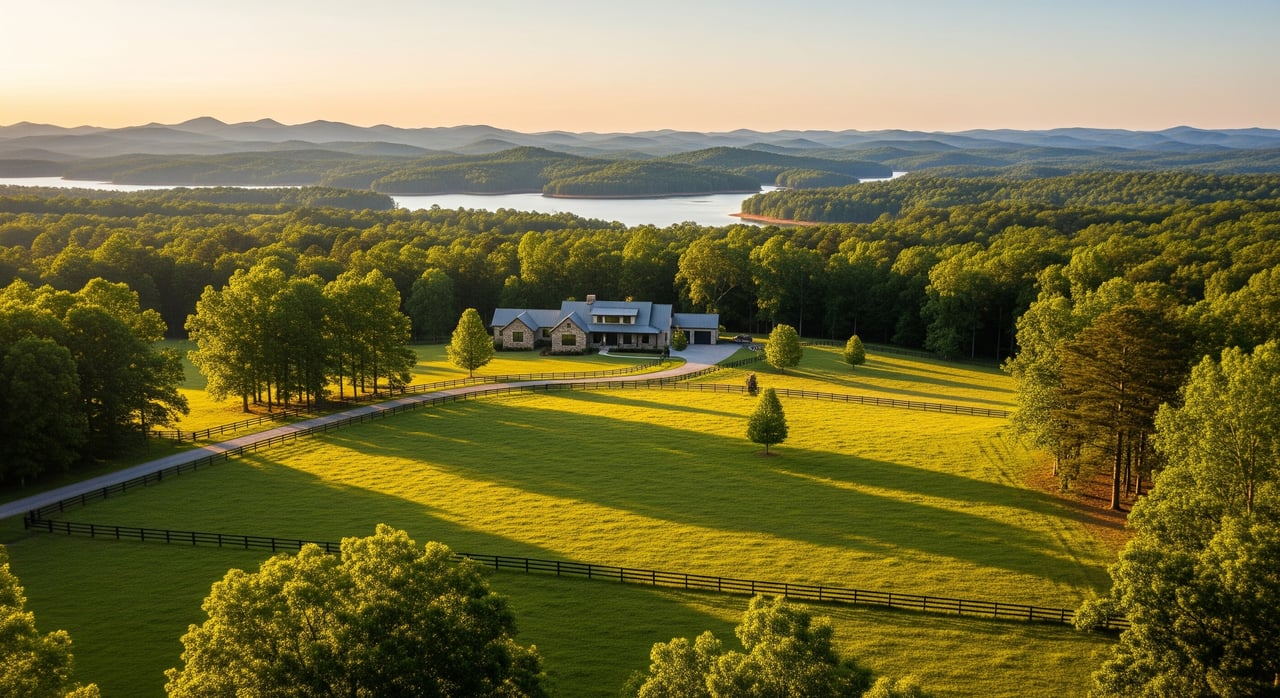
Pricing land by the acre in Oconee County can feel like trying to hit a moving target. The same acreage can sell at very different prices depending on its location, buildability, shoreline, and even the timber standing on it. If you understand the levers that buyers and appraisers weigh here, you can price confidently and avoid leaving money on the table. This guide breaks down the real drivers of per-acre value in Oconee County and gives you a practical framework to compare sales and plan your next move. Let’s dive in.
Why per-acre prices vary
Oconee County is not a single market. You have rural agricultural and forestry tracts, exurban residential growth near Seneca, Westminster, and Walhalla, and high-value lake properties on Hartwell, Keowee, and the Keowee River. Each submarket attracts different buyers and sets a different price baseline.
Demand comes from three main directions. First, amenity buyers pay for lakes, views, and recreation like boating, fishing, and hunting. Second, commuters and remote workers value proximity to Clemson, Seneca, Anderson, and even Greenville. Third, investors look at timber and agricultural potential on larger tracts. Seasonality and liquidity matter too. Rural land trades less often than neighborhood homes, so comparable sales can be sparse and appraisals may vary.
How value is measured
Most land is valued using the sales comparison approach. You find recent local sales of similar parcels, then adjust for differences like utilities, access, topography, and water features. The more closely matched the comps, the more accurate your price per acre.
For larger timber tracts or parcels held for income, buyers may also use an income or timber approach. That means valuing the standing timber by species and volume using regional stumpage prices or estimating cash flows from harvests and leases. Highest and best use is key. A parcel best suited for a single home will price very differently than one suited for subdivision, conservation, or timber investment.
Top drivers in Oconee County
Location and amenities
Proximity to towns, shopping, schools, and major highways influences who will buy your land and how much they will pay. Commute time to Clemson, Seneca, Anderson, and Greenville is a quick gauge of demand for residential and lifestyle buyers. Distance to lake access points, ramps, and marinas matters for lake users.
How to measure what you have:
- Drive time to employment centers and services.
- Distance to lake access and recreation areas on Hartwell and Keowee.
- Neighborhood context: rural setting, subdivision, or gated community.
Useful sources include Oconee County GIS, county road maps, and local MLS data.
Utilities and serviceability
Utilities can make or break a residential lot’s per-acre value. Municipal water and sewer often command a premium, while lack of power at the road or poor septic feasibility can shrink the buyer pool. Broadband and reliable cell service now influence many buyers, especially remote workers.
What to check:
- Presence of power at the road and distance to the nearest pole.
- Municipal water and sewer lines or feasibility of well and septic.
- Soil suitability for septic and any prior permits or tests.
- Broadband availability and cell coverage.
Look to county utility maps, Environmental Health records, electrical providers, and FCC broadband resources for confirmation.
Topography and soils
Slope, rock, and soil type directly affect build cost, driveway design, and what portion of the acreage is truly usable. Steep lots, shallow bedrock, and heavy cut and fill requirements can reduce value even when gross acreage looks attractive on paper.
How to evaluate:
- Percent slope and the area of level or gently sloped ground.
- Floodplain or wet areas and any setbacks.
- Soil types and percolation for septic.
Use county elevation layers, topographic maps, and the USDA NRCS Web Soil Survey. For steep or complex sites, bring in a soil evaluator or engineer.
Water features
Waterfront and water-view parcels carry strong premiums in Oconee County, especially on Lake Keowee and Lake Hartwell. That said, not all shoreline is equal. Linear feet of frontage, view quality, navigability, and private access determine how much buyers will pay. Internal streams or wetlands can add beauty and recreation but may reduce buildable area or trigger buffers and permits.
What to measure:
- Shoreline length, quality of view, and ease of access to the water.
- Setbacks, dock potential, and privacy.
- FEMA flood zones, stream buffers, and mapped wetlands.
Check Oconee County shoreline maps, FEMA Flood Insurance Rate Maps, and SC DHEC or US Army Corps resources for wetlands and permits.
Road access and frontage
Direct access on a paved state road typically improves value compared to a private easement. If access is via a private road, buyers will ask about maintenance, gates, and legal rights. Road frontage can help with visibility and utilities but does not always translate to more usable acreage.
What to verify:
- State-maintained road vs private easement and any road maintenance agreement.
- All-weather access and drive conditions.
- Deed language for access rights and shared drives.
Use SCDOT maps, plats, and deed records to confirm details.
Timber and agriculture
Standing timber provides removable economic value and can set a pricing floor for large, rural tracts. Species, age class, and ease of harvest all matter. For small farms and hobby operations, pasture suitability and soils influence buyer interest.
How to value:
- Timber inventory by species and volume and current stumpage prices.
- Harvest access, internal roads, and terrain.
- Agricultural potential based on soils and drainage.
Consult the SC Forestry Commission, local foresters, and forestry price reports. A formal timber cruise helps de-risk your valuation.
Zoning and permitting
Zoning and development rules shape the highest and best use. Minimum lot sizes, floodplain regulations, septic setbacks, and access rules affect whether a parcel can be subdivided or developed. Conservation easements and deed restrictions can limit density and lower market value, even if they offer tax benefits.
Steps to confirm:
- Zoning district and permitted uses.
- Septic permitability and setback requirements.
- Recorded easements, conservation encumbrances, and buffer rules.
The Oconee County Planning and Zoning office and county code are your primary references.
Taxes and carrying costs
Property taxes, assessments, and special classifications affect the economics for owners and investors. Timberland and agricultural use valuations can reduce carrying costs and change a buyer’s math.
What to review:
- Current assessed value and millage rates.
- Eligibility for use-value programs for timber or agricultural land.
- Changes in classification after a sale.
Work with the Oconee County Assessor and the South Carolina Department of Revenue for accurate numbers.
Build better comps
A clear comp set is the fastest way to reality-check per-acre pricing in Oconee County. Follow these steps:
- Gather recent local sales in the same submarket. Aim for the last 12 to 24 months when possible.
- Match the parcel type. Group comps by archetype such as lakeshore lots, rural timber tracts, or residential building lots near services.
- Compare key attributes. List acres, utilities, road type, distance to town, slope, buildable acres, water frontage, timber quality, zoning, and easements.
- Adjust for differences. Use a structured feature-weighting approach to apply conservative percentage or dollar-per-acre adjustments.
- Calibrate with local experts. Cross-check with a broker, appraiser, or forester when timber or technical items drive value.
Feature-weighting framework
Use the following percentage weights as a starting point when comparing parcels. These represent relative influence on value for common Oconee County archetypes. Calibrate with recent sales and local feedback.
-
Residential or buildable lot near town
- Location and proximity to amenities: 30%
- Utilities and septic feasibility: 25%
- Topography and buildable area: 20%
- Road access and frontage: 10%
- Zoning and regulatory constraints: 10%
- Timber or recreation: 5%
-
Waterfront or lake-view lot
- Water frontage, view, and amenity: 35%
- Location and proximity to marinas and services: 20%
- Utilities and septic feasibility: 15%
- Topography and usable shoreline: 15%
- Road access and privacy: 10%
- Timber or recreation: 5%
-
Rural timber or recreational tract
- Timber and standing timber value: 30%
- Harvest and property accessibility: 20%
- Topography and internal roads or buildable acres: 15%
- Location and proximity to buyer demand: 15%
- Wetlands and water features: 10%
- Zoning and easements: 10%
How to apply the weights:
- Score each comp versus your subject on the features above.
- Convert scores into conservative percentage or dollar-per-acre adjustments.
- Cross-check results with at least two other comps and adjust if a single feature is heavily skewing your outcome.
On-site evaluation checklist
Use this quick checklist to prepare a comp or evaluate a parcel in Oconee County:
- Parcel basics: acres, legal description, lot dimensions, deed restrictions, and easements.
- Market and location: closest town, commute times, proximity to shoreline access where relevant.
- Utilities and services: power at road, distance to nearest pole, water and sewer availability, or well and septic feasibility, broadband and cell coverage.
- Buildability: percent slope, buildable acres, rock or ledge, cut and fill needs, soil or geotechnical reports on steep sites.
- Environmental: FEMA flood zone, mapped wetlands, streams, and buffer requirements.
- Timber and vegetation: species mix, age class, any timber cruise or recent harvest.
- Access and legal: road surface and maintenance, private easement documentation, gates, and shared drive agreements.
- Regulatory and permits: zoning and density limits, setback rules, septic permitability.
- Taxes and financials: assessed value, tax classification, use-value programs for forest or agricultural land.
- Comparable sales: assemble 3 to 5 recent comps in the same submarket with notes on sale dates and adjustments.
Local calibration and timing
Oconee’s lake segments, exurban corridors, and rural interiors move at different speeds and price points. Waterfront premiums shift with supply and buyer demand. Proximity to Clemson and Seneca can tighten or loosen with job trends and remote work patterns. When comps are thin, bring in an appraiser, builder, or forester before making major price decisions. Fresh, local data and on-the-ground expertise will keep your per-acre pricing honest.
Ready to price your acreage with confidence or get a second opinion on a tricky parcel? Request a Free Property Valuation and tap the regionally focused land and timber expertise you need. Start a conversation with Jody Cann today.
FAQs
How much more is a waterfront acre worth in Oconee County?
- Waterfront and direct lake frontage often command strong premiums, but the size of the premium depends on location, shoreline and view quality, and scarcity. Use recent nearby lakefront sales to calibrate.
Does standing timber always add value on Oconee tracts?
- Timber carries intrinsic value, but net gain depends on species, volume, accessibility for harvest, and current stumpage prices. A timber cruise can confirm a realistic pricing floor.
How do utilities and septic impact Oconee lot prices?
- Confirmed municipal water or sewer, or documented septic feasibility, can materially increase value by widening the buyer pool. Lack of service or poor soils usually reduces per-acre pricing.
How should I account for slope or unusable acreage?
- Estimate buildable acres using topo maps or a site survey. Buyers value usable ground more than gross acreage, so discount steep or constrained portions when comparing comps.
Do conservation easements affect per-acre value in Oconee County?
- Yes. Easements limit development rights and lower the highest and best use, which typically reduces market value. They may offer tax benefits, so always review deed records and consult your advisor.