Picture your mornings with chickens scratching in the yard, a garden that actually thrives, and enough space to breathe without taking on a full-time farm. If that sounds right, Abbeville County offers a practical path to your hobby-farm goals. In this guide, you’ll learn what hobby-farm living looks like here, from parcel sizes and setups to climate, soils, permits and taxes. You’ll also see a simple checklist to help you buy with confidence. Let’s dive in.
Why Abbeville County fits hobby farms
Abbeville County is a rural Upstate community with a long agricultural heritage and an active farm base. According to the 2022 USDA Census of Agriculture, the county has about 680 farms and 110,940 acres in farms, with an average farm size near 163 acres. That mix includes both small hobby parcels and larger working operations, so you can scale your plans to fit your time and budget. You can review the county profile in the USDA data for more context on local agriculture (USDA NASS county profile).
You also get a lifestyle boost. Lakes Secession and Russell put fishing and boating within easy reach, and there are seasonal markets within a short drive. For new growers, Clemson Cooperative Extension runs local programs for soil testing, gardening, and livestock basics, which makes the transition to small-scale farming smoother (Clemson Extension — Abbeville County).
On the property side, recent county snapshots have shown a median sale price near the $300,000 mark, and land-market notes often cluster around roughly $12,000 per acre. Prices vary by waterfront access, pasture readiness, utilities and road frontage. Treat any online estimate as a starting point and verify with current MLS data or county records before you set a budget.
What fits on 1 to 50+ acres
1 to 3 acres: garden, chickens, workshop
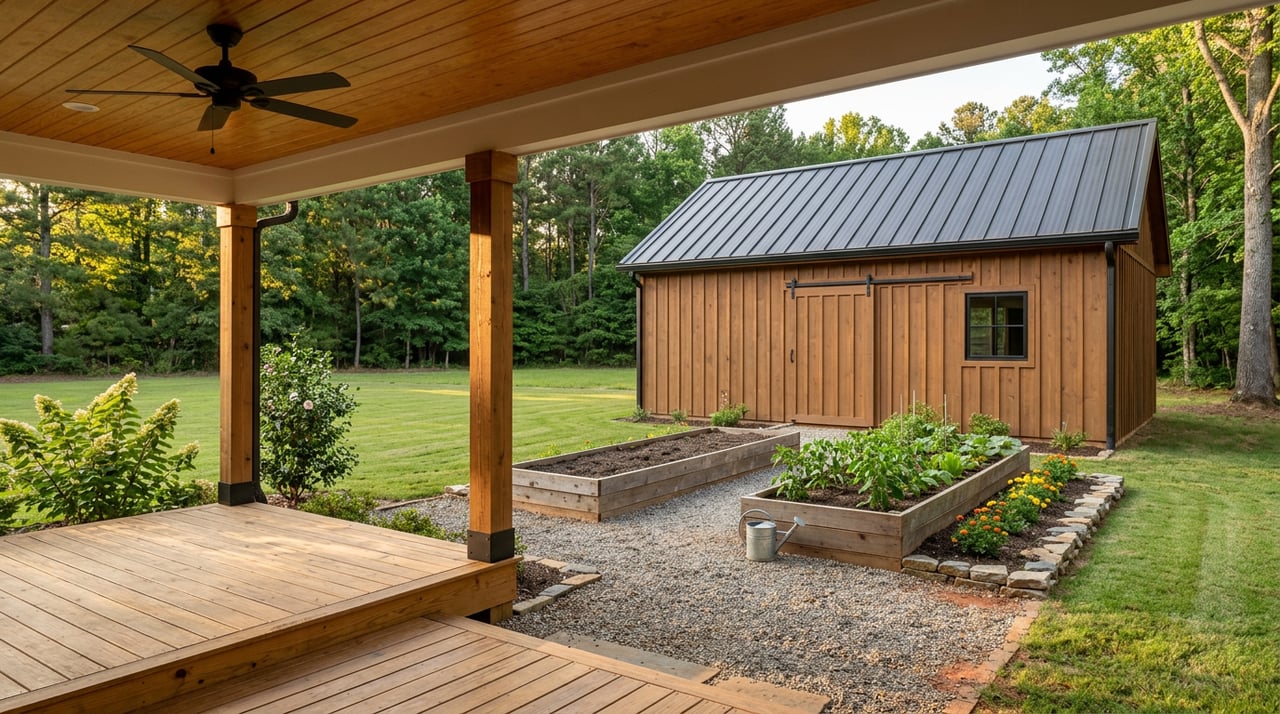
A few acres can support a strong kitchen garden, raised beds, dwarf fruit trees, a small flock of chickens, and a workshop or pole barn. Many owners use movable coops (chicken tractors) to rotate flocks across lawn or orchard alleys. Extension guidance for chicken tractors often cites about 1.5 to 2 square feet per bird inside the tractor for short-term broiler systems, with more space needed for layers and free-range setups. Predator pressure, weather and forage quality matter, so use local extension guidance to fine-tune your plan (OSU Extension on chicken tractors).
Focus your layout on sun, water access and drainage. Keep gardens away from septic fields, leave room for equipment access, and position buildings to simplify fencing and future add-ons.
3 to 10 acres: paddocks and small livestock
With a bit more acreage, you can add goats, sheep or a few horses, along with rotational grazing and sacrifice areas for wet months. As a planning anchor, university grazing research has used scenarios around about 1.6 acres per horse in rotational systems, though actual stocking depends on forage quality, fertilization and supplemental hay. Plan for sturdy perimeter fence, cross-fence, shade, and hay storage, and budget time for pasture renovation and weed control (rotational grazing research summary).
This range can also support a larger workshop or equipment shed, a small orchard, and a larger kitchen garden. If you want to sell eggs or produce, think through basic access, parking and signage, plus any zoning or business-license needs.
10 to 50+ acres: pasture, hay and small herds
At this scale, you can develop multi-paddock pasture systems, hay ground, and small cattle herds, or mix pasture with wooded recreation land. The county’s average farm size sits well above most hobby parcels, so 10 to 50 acres is a common bridge between lifestyle farming and small working operations. Plan your layout around water points, laneways for animal movement, a central barn or workshop, and equipment turning radii.
Climate and growing conditions
Hardiness zones and frost dates
Abbeville County falls in USDA Zone 8a/8b, which means mild winters and a long warm season. Gardeners typically see a last spring frost in early to mid April and a first fall frost in late October to early November. Rainfall is moderate to ample through the year, so you can support both cool-season and warm-season crops with basic irrigation.
What grows well here: tomatoes, peppers, okra, beans, sweet potatoes, blueberries and muscadines, plus peaches and figs in the right microclimate. Perennial choices should match Zone 8 conditions, and you should use local frost-date tools for planting windows by zip code.
Soils and septic siting
Expect a mix of Piedmont soils across the county, including common series like Cecil and Pacolet. These can be productive with good management, but soil testing is essential for kitchen gardens, orchards and pasture renovation. Before you buy, review NRCS farmland-classification maps and soil descriptions to spot steeper tracts, seasonal wet spots and soils with limitations for septic absorption (NRCS farmland-classification map resource). Pair that with a site-specific soil test so you know your lime and nutrient needs from day one.
Rules, permits and taxes to plan for
Zoning basics
Most rural parcels are in agricultural or resource districts that generally allow farming and accessory uses. That said, details matter. Setbacks, accessory-building size, the number of dwellings per parcel, and camper/RV rules vary by district and parcel size. Always confirm your intended use with the county planner before you buy or build (Abbeville County Planning & Zoning).
Also check for private restrictions. HOA covenants and recorded deed restrictions can limit animals like chickens, bees or goats even if county zoning allows them. Ask for seller disclosures and recorded covenants early.
Septic and building permits
If your new home or addition will use a septic system, you must obtain an SCDHEC septic permit before the county issues building permits. For properties with an existing system, the county may accept a licensed septic contractor’s letter. This makes septic feasibility a top priority during due diligence (Abbeville County Building & Codes).
Agricultural use-value (special assessment)
Abbeville County allows qualifying tracts to receive an agricultural-use classification, sometimes called “use value.” If at least 50% of a tract qualifies as agricultural real property, the whole tract may receive the agricultural classification. Applications go through the Assessor’s Office, and roll-back taxes can apply if you later change the land’s use. Each case is specific, so apply early if you think you qualify (Assessor — common terms).
Bees, livestock and sales
Beekeeping is governed at the state level, with an apiary inspection program and registration guidance. If you plan to sell honey or move colonies across state lines, be aware of inspection and paperwork requirements under South Carolina law (state apiculture code reference). For small livestock, confirm any local animal ordinances within town limits, and always check private covenants.
Services and supplies nearby
You have practical support within the county and nearby. The Clemson Cooperative Extension office offers soil testing, workshops, and beginning-farmer help, which is a smart first stop when you plan gardens, orchards or pastures (Clemson Extension — Abbeville County). Regional farm-supply stores carry fencing, feed, minerals and small equipment. Large-animal veterinarians serve the area for routine care, with referral options for advanced cases. Seasonal markets provide local outlets for excess produce or value-added goods.
Recreation adds to the draw. Lake days on Secession or Russell pair well with a few raised beds, a fruiting trellis and a weekend flock. Many owners use hobby-farm parcels as basecamps for hunting, fishing and gardening.
A simple buyer checklist
Use this list to keep your search focused and your due diligence tight.
- Confirm zoning and permitted uses for the parcel with the county planner. Ask about accessory buildings, temporary RV rules and the number of dwellings allowed (Planning & Zoning).
- Verify septic feasibility early. For new builds, the SCDHEC septic permit is required before county building permits. For existing systems, request documentation from a licensed septic contractor (Building & Codes).
- Review soils and slopes with NRCS maps, then order a lab soil test for your garden or pasture plan. Use maps to flag wet zones and potential septic constraints (NRCS farmland-classification map resource).
- Ask the Assessor about agricultural-use classification and any income or use tests for small acreage. Understand roll-back tax risk before changing land use (Assessor — common terms).
- Request a current survey, confirm legal access and easements, and obtain all recorded covenants or HOA documents from the seller or closing attorney.
- Confirm utilities. Determine whether county water is at the road or a private well is needed. Budget for well drilling and water-quality testing if applicable.
- Talk with local Extension and USDA/NRCS staff about pasture planning, cost-share options for fencing and water points, and conservation practices that fit your goals.
Real-world setup ideas
- Weekend garden plus chickens (1 to 3 acres). Prioritize a sunny, well-drained lawn area for raised beds; add a movable coop and basic perimeter fence. Keep gardens clear of septic fields and allow room for a small tool shed.
- Beginner paddocks and goats or sheep (5 to 15 acres). Look for fence-ready pasture, a reliable water source, and a spot for hay storage. Plan cross-fencing and a sacrifice lot to protect grass during wet spells.
- Lake-adjacent getaway with a garden (any acreage). Waterfront lots command higher prices, but the tradeoff is year-round recreation. Confirm shoreline rules and any dock permits, and place gardens and outbuildings to protect views and privacy.
Putting it all together
Hobby-farm living in Abbeville County is about matching your dream to a practical plan. The county’s agricultural backbone, long growing season, workable soils and supportive local resources set you up for success. Your job is to right-size the acreage, confirm the rules, and design a layout that fits your lifestyle.
If you want a partner who understands both land and residential needs, our team pairs forestry and farm know-how with full-service marketing in the Upstate. We help you evaluate soils, access, timber value and market comps so you can move forward with clarity.
Ready to find the right acreage or price your current property? Connect with Joseph Cann for a no-pressure consult or Request a Free Property Valuation to get started.
FAQs
What does a starter hobby farm look like in Abbeville County?
- Most buyers begin on 1 to 3 acres with raised beds, a small flock of chickens in a movable coop, a few fruit trees, and a simple workshop or shed.
How many acres do I need for a horse in this area?
- Rotational-grazing research often uses about 1.6 acres per horse as a planning anchor, but actual acreage depends on pasture quality and supplemental feeding.
Are chickens and bees allowed on rural parcels in Abbeville County?
- Agricultural zoning often allows small livestock and beekeeping, but you must confirm county zoning and check any private HOA or deed restrictions before buying.
What permits come first if I plan to build a home on acreage?
- Secure your SCDHEC septic permit before the county will issue building permits, and verify well or county water access during due diligence.
Can my small acreage qualify for agricultural use-value taxes?
- It can, depending on use and acreage; if at least 50% of a tract qualifies as agricultural real property, the whole tract may be classified, subject to Assessor approval.
What grows well in Abbeville County’s climate?
- In Zone 8a/8b you can grow warm-season vegetables, blueberries, figs and muscadines; use local frost dates for planting windows and run a soil test before you start.